
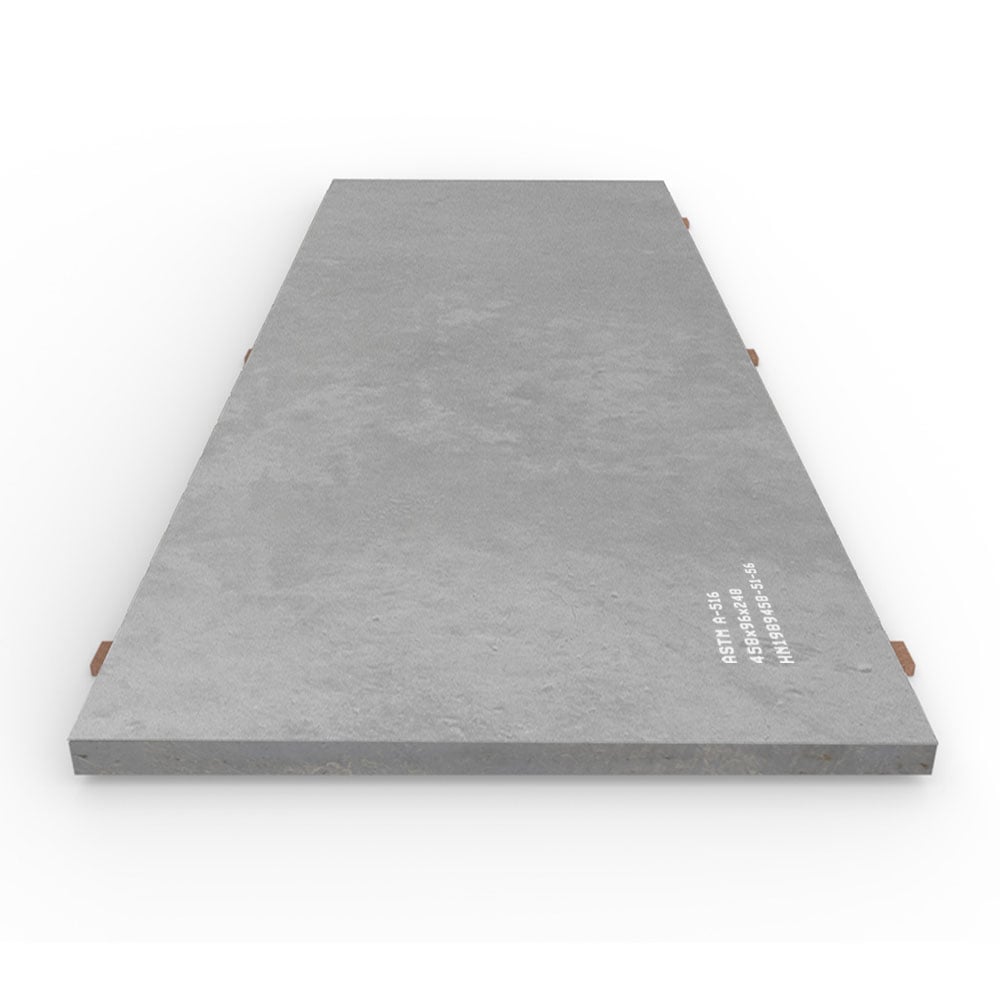
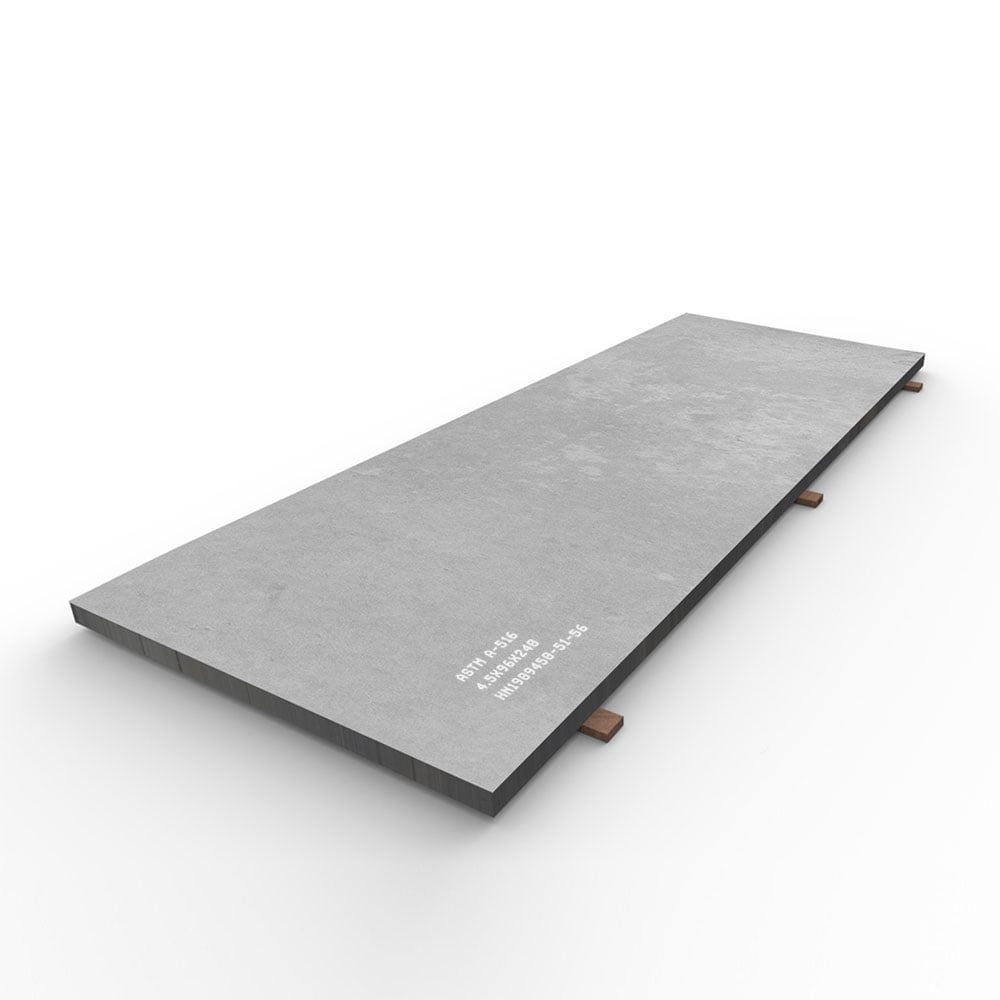
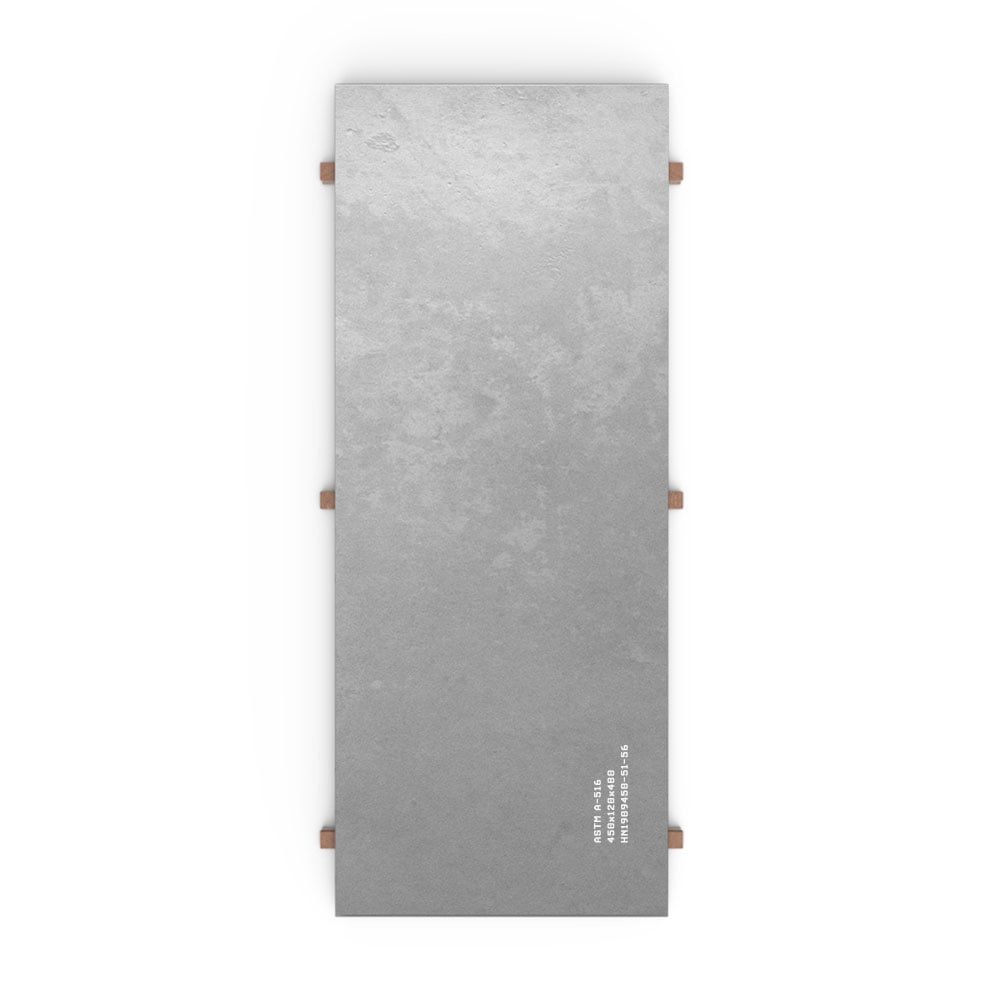
ASTM A516 PVQ Steel Plate

ASTM A516 is a PVQ carbon steel plate intended primarily for service in welded pressure vessels at moderate or lower temperatures, where notch toughness is important.

BUILD A QUOTE

Features

  • Available in four grades: 55, 60, 65 and 70.

  • Plates under 1.5” thick are usually supplied as-rolled.

  • Plates over 1.5” thick are usually supplied normalized.

  • Available in standard and heavy (3-inches or greater) plate thickness.

  • May be certified to meet multiple grades on mill test reports, but guaranteed to meet the requested A516 grade.

  • Select grades are available to purchase online via Leeco® Pro. Click here to log on or contact us to learn more.
Build Your Quote

Use our quote builder to configure your steel plates by selecting the material, size, thickness, quantity, and any custom requirements for fast, accurate pricing.

Product Details

Grade Thickness Width Length
A516-55 3/16" – 8" 48" – 120" Up to 480"
A516-60 3/16" – 8" 48" – 120" Up to 480"
A516-65 3/16" – 8" 48" – 120" Up to 480"
A516-70 3/16" – 8" 48" – 120" Up to 480"
Grade Yield Point (ksi) Tensile Strength (ksi) Min. 8” Elongation %
55 30 55-75 23
60 32 60-80 21
65 35 65-85 19
70 38 70-90 17
Carbon Max, >1/2" & ≤2" Thick 0.20%
Carbon Max, >2" & ≤4" Thick 0.22%
Carbon Max, >4" & ≤8" Thick 0.24%
Carbon Max, >8" Thick 0.26%
Carbon Max, ≤1/2" Thick 0.18%
Manganese, >1/2" thick 0.60-1.20%
Manganese, ≤1/2" thick 0.60-0.90%
Phosphorus max 0.025%
Sulfur max 0.025%
Silicon 0.15-0.40%
Carbon Max, >1/2" & ≤2" Thick 0.23%
Carbon Max, >2" & ≤4" Thick 0.25%
Carbon Max, >4" Thick 0.27%
Carbon Max, ≤1/2" Thick 0.21%
Manganese, >1/2" thick 0.85-1.20%
Manganese, ≤1/2" thick 0.60-0.90%
Phosphorus max 0.025%
Sulfur max 0.025%
Silicon 0.15-0.40%
Carbon Max, >1/2" & ≤2" Thick 0.26%
Carbon Max, >2" & ≤4" Thick 0.28%
Carbon Max, >4" Thick 0.29%
Carbon Max, ≤1/2" Thick 0.24%
Manganese 0.85-1.20%
Phosphorus max 0.025%
Sulfur max 0.025%
Silicon 0.15-0.40%
Carbon Max, >1/2" & ≤2" Thick 0.28%
Carbon Max, >2" & ≤4" Thick 0.30%
Carbon Max, >4" Thick 0.31%
Carbon Max, ≤1/2" Thick 0.27%
Manganese 0.85-1.20%
Phosphorus max 0.025%
Sulfur max 0.025%
Silicon 0.15-0.40%

Grade Comparison

Frequently Asked Questions

Learn more about A516 steel plate.
ASTM A573 is a structural carbon steel plate commonly used for storage tanks when improved toughness is needed at normal atmospheric service temperatures. ASTM A516 is a pressure vessel steel plate used primarily for welded pressure vessels in moderate- and lower-temperature service. The right grade depends on whether the project requires structural tank plate or pressure vessel plate requirements.
ASTM A612 and ASTM A516 are both carbon steel pressure vessel plate specifications used for moderate and lower-temperature service. A612 is a high-strength carbon-manganese-silicon steel plate, while A516 is a broader PVQ plate specification available in Grades 55, 60, 65 and 70 where improved notch toughness is important. The right choice depends on the pressure vessel design, required strength, temperature service, thickness and project specification.
ASTM A537 and ASTM A516 are both pressure vessel quality steel plate specifications, but A537 is heat-treated to increase yield and tensile strength, especially when compared to A516 grades. A537 is used for boilers, pressure vessels and welded structures that require higher strength and improved toughness, while A516 is commonly used for welded pressure vessels in moderate and lower-temperature service where notch toughness is important. The right choice depends on the vessel design, required strength, heat-treatment needs, service temperature and project specification.
ASTM A516 steel plate, also referred to as PVQ A516, is used primarily for welded pressure vessels that operate at moderate or lower temperatures. It is commonly selected when the application requires pressure vessel quality carbon steel with improved notch toughness, such as tanks, boilers, pressure vessels and related pressure-retaining equipment.
PVQ stands for pressure vessel quality. In the context of ASTM A516, PVQ means the plate is intended for pressure vessel applications where weldability, strength and notch toughness are important for moderate- and lower-temperature service.
A516 Grades 55, 60, 65 and 70 are pressure vessel plate grades with different strength levels. The grade number corresponds to the tensile strength range, with Grade 55 having the lowest strength range and Grade 70 having the highest strength range in the A516 family. The right grade depends on the pressure vessel design, required strength, thickness, toughness requirements and project specification.
A516 steel plate may be supplied as-rolled or normalized depending on plate thickness and project requirements. Plates under 1.5” thick are usually supplied in the as-rolled condition, while plates over 1.5” thick are usually supplied in the normalized condition. Normalizing can help refine the steel structure and improve toughness, which is especially important for pressure vessel applications.
Charpy impact testing is not automatically required for every ASTM A516 plate order, but it may be specified when the pressure vessel application requires verified toughness for lower-temperature service or project-specific conditions. Because A516 is used where improved notch toughness is important, impact testing requirements should be confirmed when the plate is ordered.
A516 steel plate may be certified to multiple grades on the mill test report (MTR) when the material satisfies the requirements of each grade. However, the plate should still be ordered to the specific A516 grade required by the project, and the MTR should confirm that the material meets that requested grade.