Wind Energy Steel Plate Supplier

Leeco® Steel is the largest supplier of steel plate material for wind tower bases, wind tower structures and components related to wind tower manufacturing to manufacturers across North America. Since the early 2000’s, Leeco’s expert Energy division has worked to supply manufacturers with the specific grades of steel plate needed in large quantities, delivered across North America.

EN & ASTM Grades

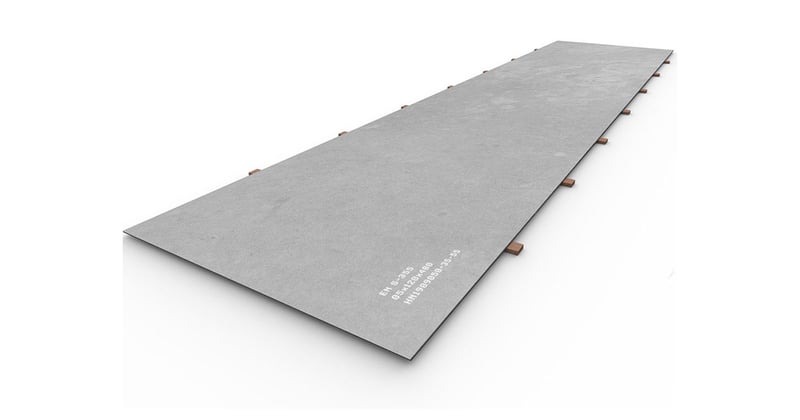
Leeco stocks the most common EN and ASTM grades for wind structure fabrication.

Traceability with Each plate

Complete MTR and material testing documentation included for every plate.

Tailored Sourcing Solutions

We offer inventory management and railcar tracking services as part of our stocking solutions.

Common Steel Plate Grades for Wind Energy

Wind tower and wind energy structure fabricators commonly use EN structural steel plate grades selected for strength, weldability and impact toughness. S355 grades are widely used in wind structures, while normalized fine-grain grades such as S355NL and S420NL may be specified for applications requiring higher strength or greater low-temperature toughness. Grade requirements vary by tower design, plate thickness, operating environment and project specification.

Grade EN Spec Min. Yield* Impact Toughness Common Application
S355JO EN 10025-2 355 MPa 27 J @ 0°C Structural wind
S355J2 EN 10025-2 355 MPa 27 J @ -20°C Increased low-temperature toughness
S355K2 EN 10025-2 355 MPa 40 J @ -20°C Higher impact toughness
S355NL EN 10025-3 355 MPa 27 J @ -50°C Normalized fine-grain structural
S420NL EN 10025-3 420 MPa 27 J @ -50°C Higher-strength structural
S460NL EN 10025-3 460 MPa 27 J @ -50°C Higher-strength structural

*Mechanical properties vary by plate thickness and applicable specification. Grade selection should be based on project design requirements and approved material specifications.

Processed Parts & Profiles

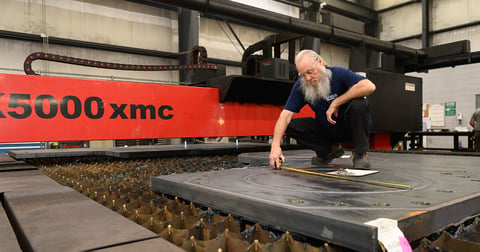
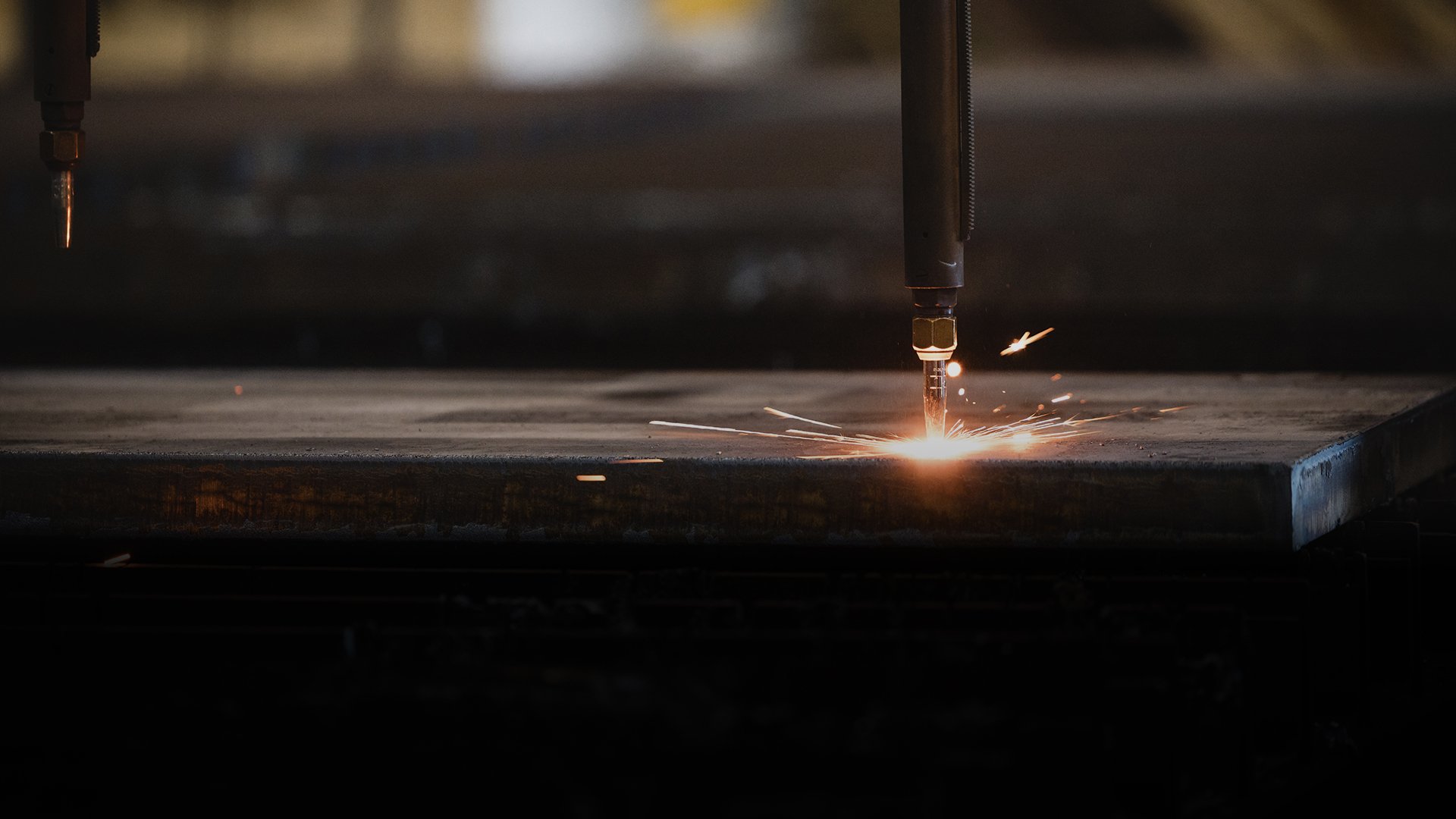
Fabricators of wind energy structures may also benefit from Leeco’s processing services. Leeco’s processing services can augment in-house capabilities, so plate parts arrive ready for fabrication. Leeco’s combination plasma and oxy machines allow us to produce parts with multiple functions – such as drilling, tapping, beveling and chamfering – on a single setup, which saves time and cost while reducing nonconformances. 

The Leeco Advantage

Leeco strives to be a true partner, not just a transaction. With nearly 30 years of experience serving wind structure manufacturers, our dedicated service team understands industry nuances better than any other steel plate supplier. We deeply understand the plate market and use that knowledge and expertise to help you make the best sourcing decisions for your business.

Frequently Asked Questions

Learn more about steel plate for wind energy.
Wind turbine towers and related structures commonly use EN structural steel grades in the S355 family, including S355J0, S355J2 and S355K2, as well as normalized fine-grain grades such as S355NL. Higher-strength grades such as S420NL or S460NL may also be specified depending on the component, plate thickness, operating temperature and structural design. The appropriate grade should always be determined by the project's engineering specifications.
Applications for steel plates in the wind energy industry can differ. A wind turbine can be onshore or offshore, both having different condition requirements that a steel plate must offer. Steel plate used in onshore applications must adhere to harsh conditions such as wind patterns and colder temperatures, and must be able to withstand these conditions long-term. Onshore wind turbine applications include:
  • Shell Plates
  • Internal Components
  • Door Frames
  • Embedment rings/Foundation plates
  • Offshore Wind Turbines
Although offshore wind turbines hold the same structure as onshore wind turbines, they must be able to uphold to harsher, corrosive maritime environments. Applications of steel plate for offshore structures is similar to onshore structures, except that offshore structures utilize a steel-based monopile as the foundation of the structure.

Offshore wind structures are exposed to saltwater, moisture, wave loading and more demanding environmental conditions than onshore turbines. As a result, offshore projects often require heavier plate thicknesses, larger structural components and stricter quality requirements for foundations, monopiles and transition pieces. While both sectors rely on high-quality steel plate, offshore structures generally require greater material volumes and more robust fabrication standards.
Wind energy fabricators should evaluate a supplier's inventory depth, plate availability, processing capabilities, quality certifications and experience serving wind energy manufacturers. Access to large quantities of structural steel plate, value-added processing services and reliable delivery can help reduce lead times and support production schedules. Suppliers with extensive experience in wind tower and foundation applications are often better equipped to meet project requirements.
The amount of steel plate required to manufacture a wind turbine structure varies based on whether the turbine is installed onshore or offshore. Additionally, towers have gotten taller to capture stronger wind resources and support larger generating capacities. This has increased the amount of steel plate required to produce a tower. Onshore wind turbines typically use 250-350mt of steel plate per tower, with the average tower being closer to 300mt. Offshore wind turbines without the foundational monopile generally require 600-800mt of steel plate depending on the turbine size, hub height and design. Monopiles typically require 2,200mt of steel plate. Offshore wind projects often consume more steel because they include large components such as transition pieces and other marine-support structures designed to withstand harsh ocean conditions. The total steel requirement ultimately depends on factors such as turbine size, tower height, foundation design and project location.
Steel plate thickness in wind tower fabrication varies based on the application, tower design and turbine size. For onshore wind towers, shell plate used to form the tower sections typically ranges from 14 mm to 60 mm (0.5”-2.36”), depending on whether the tower is built in three-, four- or five-section configurations and the size of the turbine. Door frame plate, which reinforces the tower access opening, generally ranges from 50 mm to 90 mm (1.96”-3.5”) based on structural design requirements. For offshore wind towers, shell plate commonly ranges from 14 mm to more than 70 mm (0.5”-2.76”) due to the larger turbine sizes and increased loading demands associated with marine environments. Offshore door frame plate can exceed 120 mm (4.72”), particularly on larger turbines and next-generation wind energy projects. Ultimately, engineers determine the required plate thickness based on factors such as turbine capacity, tower height, environmental conditions and project-specific design criteria.
A oxy fuel torch head on a oxy table cutting into a steel plate.

Contact Leeco Steel

We want to be your supplier of choice for steel plate, parts and profiles.