
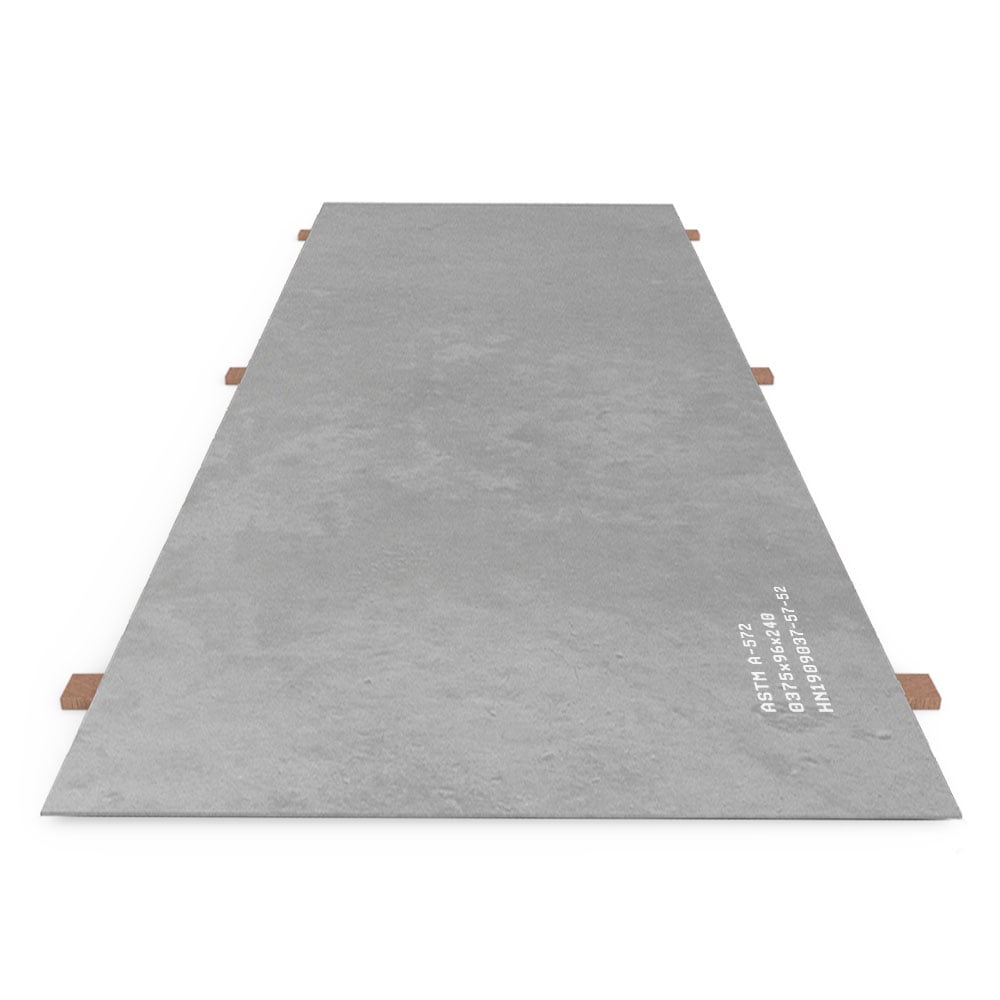
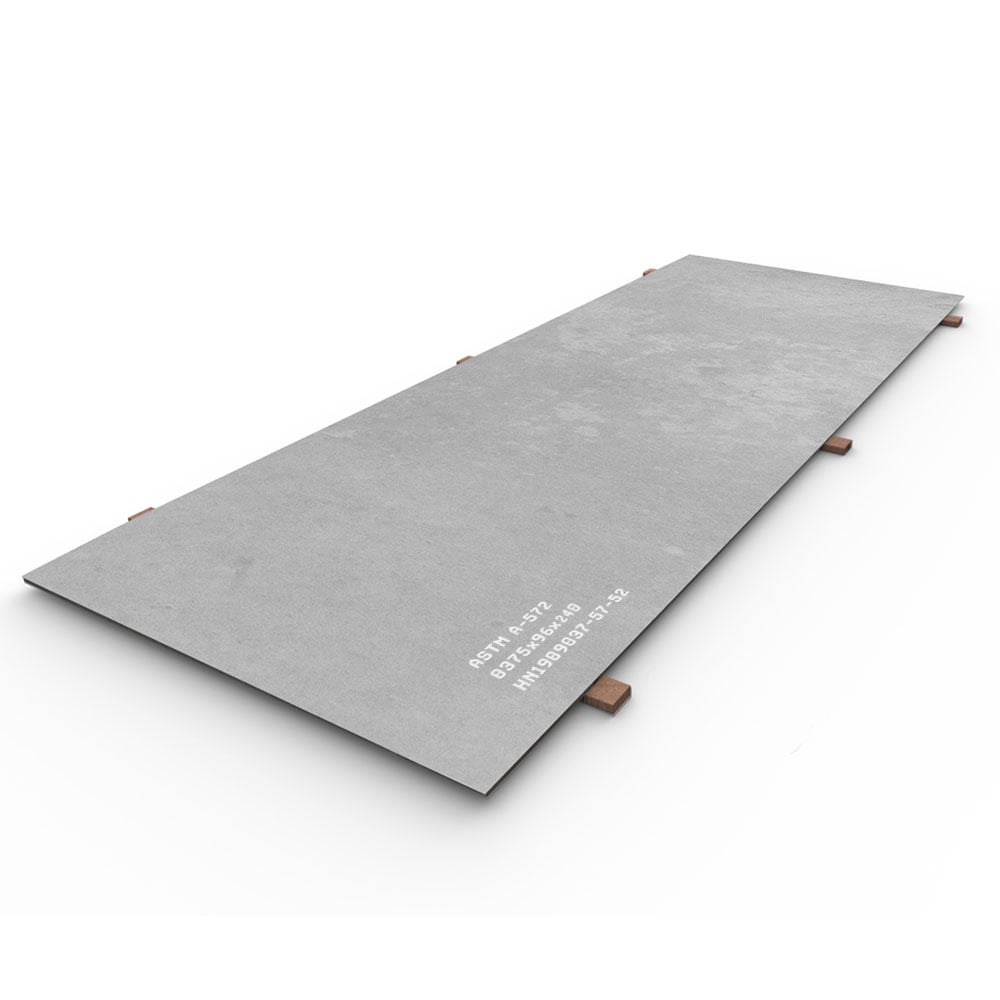
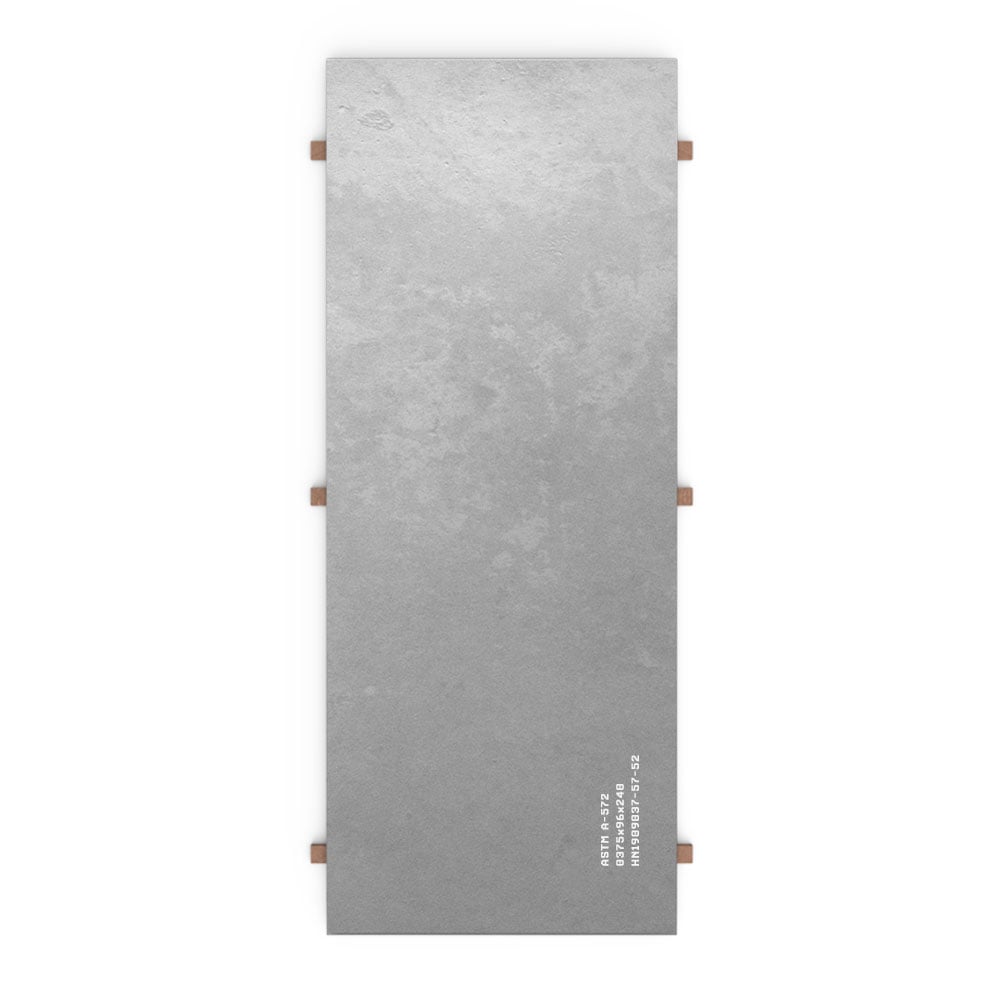
A572 Steel Plate

ASTM A572 steel plate is a high-strength low-alloy (HSLA) structural steel used in applications that require strong load-bearing performance, formability and machinability. It is a practical choice for infrastructure, energy, construction and industrial manufacturing projects.

BUILD A QUOTE

Features

  • Available in Grades 42, 50, 55, 60 and 65.

  • A572 Grade 50 is the most common grade.

  • Available in standard and heavy (3-inches or greater) plate thickness.

  • May be certified to multiple standards on mill test reports, but guaranteed to be certified to meet ASTM A572 standards.

  • Select grades are available to purchase online via Leeco® Pro. Click here to log on or contact us to learn more.
Build Your Quote

Use our quote builder to configure your steel plates by selecting the material, size, thickness, quantity, and any custom requirements for fast, accurate pricing.

Product Details

Grade Thickness Width Length
A572-42 4"-6" 48"-120" Up to 480"
A572-50 3/16"-4" 48"-120" Up to 480"
A572-55 3/16"-1 1/2" 48"-120" Up to 480"
A572-60 3/16"-1 1/4" 48"-120" Up to 480"
A572-65 3/16"-1 1/4" 48"-120" Up to 480"
Grade Yield Point (ksi) Tensile Strength (ksi) Min. 8" Elongation %
42 42 60 20
50 50 65 18
55 55 70 17
60 60 75 16
65 65 80 15
Carbon max 0.21%
Manganese max 1.35%
Phosphorus max 0.030%
Sulfur max 0.030%
Silicon, > 1 1/2" thick 0.15-0.40%
Silicon max, plates ≤ 1 1/2" thick 0.40%
Carbon max 0.23%
Manganese max 1.35%
Phosphorus max 0.030%
Sulfur max 0.030%
Silicon, > 1 1/2" thick 0.15-0.40%
Silicon max, plates ≤ 1 1/2" thick 0.40%
Carbon max 0.25%
Manganese max 1.35%
Phosphorus max 0.030%
Sulfur max 0.030%
Silicon, > 1 1/2" thick 0.15-0.40%
Silicon max, plates ≤ 1 1/2" thick 0.40%
Carbon max 0.26%
Manganese max 1.35%
Phosphorus max 0.030%
Sulfur max 0.030%
Silicon max 0.40%
Carbon max 0.26%
Manganese max 1.35%
Phosphorus max 0.030%
Sulfur max 0.030%
Silicon max 0.40%
Carbon max 0.23%
Manganese max 1.65%
Phosphorus max 0.030%
Sulfur max 0.030%
Silicon max 0.40%
Columbium 0.005-0.05%
Vanadium 0.01-0.15%

Multi-Certification

ASTM A572 Grade 50 steel plate may be certified to multiple specifications on the mill test report when the material meets each standard’s requirements. It is commonly dual-certified with ASTM A36, offering A36 compliance with the higher yield strength of A572 Grade 50. Depending on the material, testing and project requirements, A572 Grade 50 may also be certified to related structural specifications such as ASTM A709 Grade 50 or CSA G40.21 50W.

Product MTRs commonly also certify the plate for
A572 Grade 50 ASTM A36

ASTM A709 Grade 50

CSA G40.21 50W

Grade Comparison

Frequently Asked Questions

Learn more about A572 steel plate.
S355 is governed by EN standards, but some projects may require material that meets ASTM standards. ASTM A572 Grade 50 is commonly considered a close comparison and may be an acceptable substitute for some S355 applications because both grades have similar chemical compositions and are high-strength, low-alloy structural steels. However, S355 qualities such as JR, J0, J2, K2, NL or ML can have different toughness, delivery condition and Charpy requirements, so substitute material should be reviewed carefully. Always confirm the project specification, mechanical properties, chemistry, Charpy requirements and MTR details before substituting ASTM A572, ASTM A709 or another grade for S355.
A36 is a mild carbon structural steel commonly used for general structural applications, while A572 is a high-strength low-alloy steel available in higher strength grades. A36 is often chosen for cost efficiency, availability and fabrication ease, while A572 may be a better fit when a project requires higher yield strength or stronger load-bearing performance.
CSA G40.21 50W steel plate and ASTM A572 Grade 50 are often compared because both are high-strength structural steel grades with similar yield strength levels. CSA 50W, also known as 350W, is produced to Canadian Standards Association requirements, while ASTM A572 Grade 50 is produced to ASTM requirements. In some cases, CSA 50W plate may be multi-certified with ASTM A572 Grade 50 on the mill test report (MTR) when the material satisfies both specifications. Substitution or multi-certification should be confirmed against the project specification, mechanical properties, chemistry, Charpy requirements and MTR details.
A656 is typically a better fit when a project needs HSLA steel plate with improved formability for fabricated parts such as crane booms, truck frames, rail cars, construction equipment and transportation components. A572 is also an HSLA structural steel, but A656 is more closely associated with applications where strength-to-weight performance and formability are especially important. Ultimately the appropriate grade depends on the project's engineering requirements, fabrication needs and specifications.
ASTM A572 steel plate is a high-strength low-alloy (HSLA) structural steel used in applications that require more strength than standard mild carbon steel. A572 steel contains chemical alloys that enhance hardness and load-bearing ability, while still offering ductility, machinability and formability for structural use. A572 is also among the more economically priced steel plate grades and is available in Grades 42, 50, 55, 60 and 65, with A572 Grade 50 being the most common.
A572 steel plate is commonly used in structural applications where strength, formability and load-bearing performance are important. It is often chosen for bridge and building construction, as well as energy applications such as transmission towers, wind turbine structures and wind tower components. A572 is also used in construction equipment, industrial manufacturing applications such as machinery and truck parts and road plate applications.
A572 offers high strength, ductility and machinability for structural applications. Additional benefits include:
  • Formability: Simple to form into various structural configurations without sacrificing performance.
  • Handles heavy loads: Maintains the ability to bear significant stresses and loads.
  • Cost effective: A572 is among the more economically priced steel plate grades.
A572 steel plate is available in Grades 42, 50, 55, 60 and 65. Each grade has slightly different mechanical properties and chemical compositions, but the most notable difference is strength. Grade 65 has the highest minimum yield strength, but it is typically higher cost and heavier weight. Grade 50 is the most commonly-requested grade because it offers a strong balance of strength, availability and structural performance. Ultimately the appropriate grade depends on the project's engineering requirements, fabrication needs and specifications.
A572 is produced to meet ASTM material standards, but some countries or projects require steel plate that aligns with local or alternative standards. For EN standard structural projects, S355 is often used in place of A572-50 and is generally considered equivalent for many applications, including wind energy. For Canadian structural steel projects, CSA G40.21 50W may also be considered comparable to A572-50 and may be multi-certified when the material meets both specifications. Other mild carbon or HSLA plate grades, including ASTM A36, may also be suitable depending on the application. Substitutions should always be verified against the required specification, mechanical properties, chemical composition and MTR details.
Charpy impact testing is not typically required for every ASTM A572 steel plate order. However, it may be needed for applications where notch toughness is important, such as welded bridge construction, low-temperature service or other toughness-sensitive structural uses. If Charpy testing is required, it should be specified when the plate is ordered.