
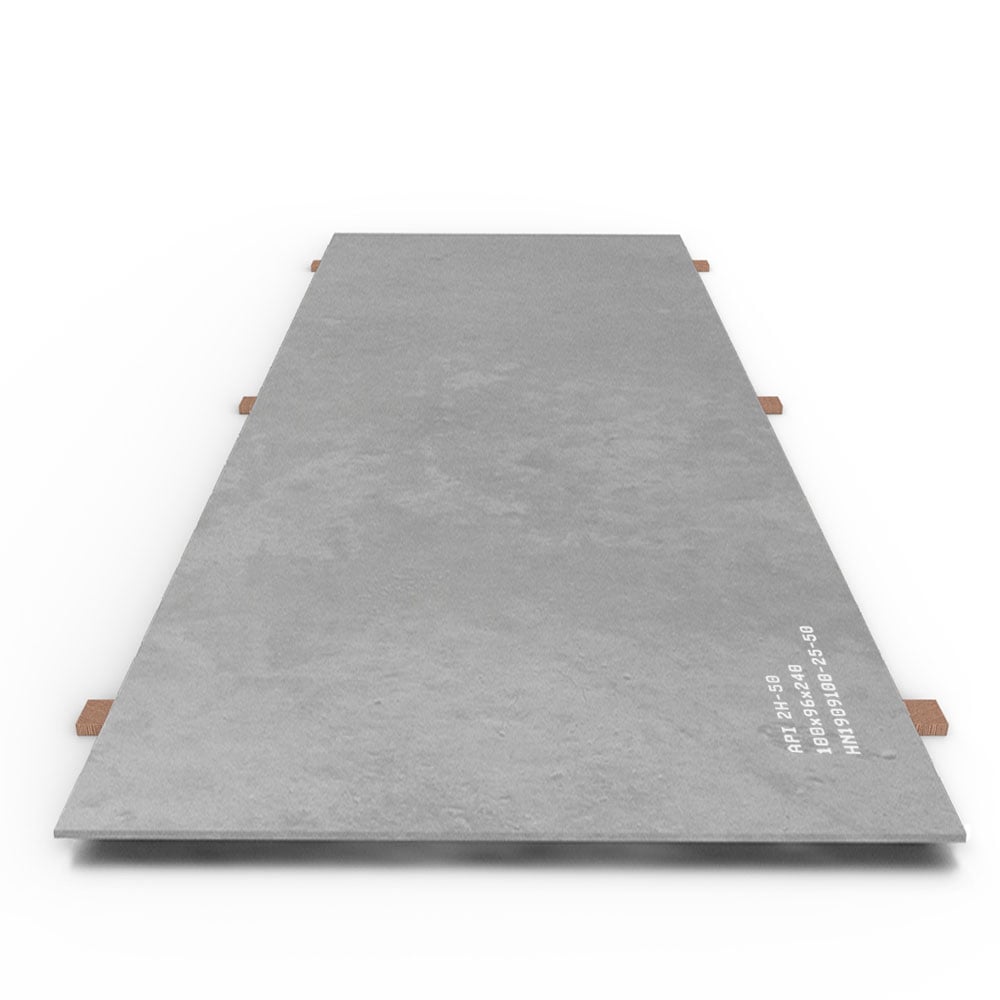
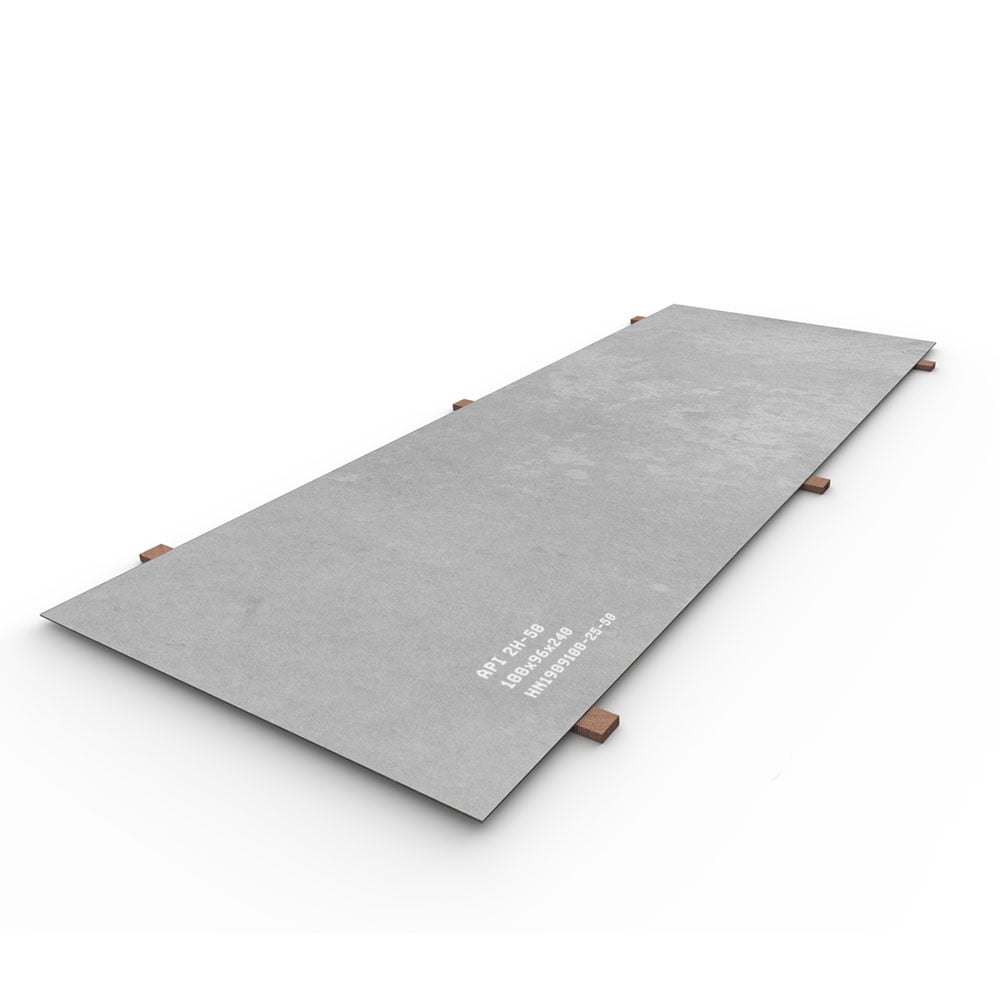
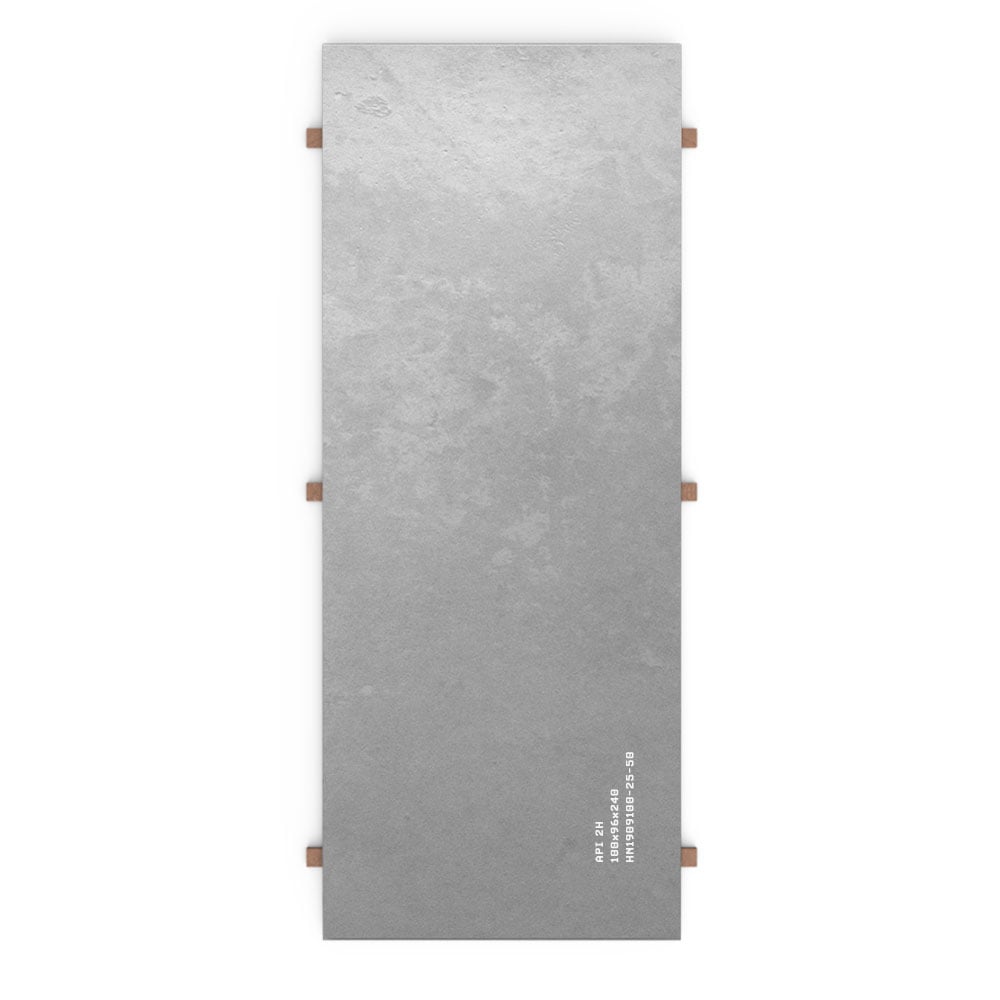
API 2H Offshore Steel Plate

API 2H steel plate is certified by the American Petroleum Institute for use in welded offshore structures. Leeco® Steel stocks API 2H plate in Grades 42 and 50 for applications that require intermediate strength, impact toughness and resistance to fatigue loading.
BUILD A QUOTE

Features

  • Available in Grades 42 and 50, with Grade 50 supplied as heat-treated material.

  • Charpy test requirements for specific zones and climates may be requested.

  • May be certified to meet multiple specifications on Mill Test Report.

  • Mill test reports will be provided to confirm composition and material properties.

  • May be requested with S1, S3, S4 and S5 supplements.
Build Your Quote

Use our quote builder to configure your steel plates by selecting the material, size, thickness, quantity, and any custom requirements for fast, accurate pricing.

Product Details

Grade Thickness Width Length
API 2H Grade 42 1/4" – 4" 48" – 120" Up to 480"
API 2H Grade 50 1/4" – 4" 48" – 120" Up to 480"
Grade Yield Point (ksi) Tensile Strength (ksi) Min. 8” Elongation %
Grade 42 42 62-82 18
Grade 50 ≤2.5" thick 50 70-90 16
Grade 50 >2.5" thick 47 70-90 16
Carbon 0.18%
Manganese 0.90-1.35%
Phosphorus max 0.030%
Sulfur max 0.010%
Silicon 0.05-0.40%
Columbium max 0.04%
Aluminum total 0.02-0.06%
Nitrogen max 0.012%
Titanium max 0.02%
Carbon 0.18%
Manganese 1.15-1.60%
Phosphorus max 0.030%
Sulfur max 0.010%
Silicon 0.05-0.40%
Columbium max 0.01-0.04%
Aluminum total 0.02-0.06%
Nitrogen max 0.012%
Titanium max 0.02%

Multi-Certification

API 2H steel plate may be certified to multiple specifications when the material meets each standard’s requirements. API 2H is issued by the American Petroleum Institute for offshore structural steel plate, while ABS certification is issued by the American Bureau of Shipping for marine and shipbuilding applications.

Grade MTRs commonly also certify the plate for
API 2H Grade 50 ASTM A633 Grade C

ABS DH36/EH36

ASTM A537 Class 1

If projects require multi-certified plate material, the mill test report (MTR) will include results for material supplementary requirements, or "supplements." Leeco's material almost always includes supplements S1, S3, S4 and S5. Contact a member of our team to learn more.

Grade Comparison

Frequently Asked Questions

Learn more about API 2H steel plate.
The best materials for offshore equipment are those that can withstand saltwater exposure, cyclic loading, harsh weather and demanding structural requirements. Offshore fabricators commonly use API 2H Grade 50, ABS EH36, ABS DH36 and other marine-grade steel plates engineered for welded offshore structures. These materials offer high strength, excellent weldability, strong impact resistance and improved fatigue performance. Applications such as offshore platforms, tubular joints, suction piles, cranes, winches, anchoring systems, manifolds and subsea structures require materials capable of resisting plastic fatigue loading and maintaining integrity under dynamic conditions. API 2H is widely specified because it was specifically developed for critical offshore structures where toughness and reliability are essential.
API 2H steel plate is used in welded offshore structures where intermediate-strength steel plate must resist impact, fatigue loading and demanding marine service conditions. Common offshore uses include tubular joints, stiffened plate construction and other structural intersections where plate may experience through-thickness tension or cyclic loading.
API 2H certification means the steel plate meets American Petroleum Institute requirements for carbon-manganese steel plate used in welded offshore structures. For fabricators, this certification helps confirm that the plate meets offshore structural requirements for strength, toughness, weldability and traceability, which should be documented on the mill test report.
API 2H Grade 42 and Grade 50 are both offshore structural steel plate grades, but they differ in minimum yield strength and processing requirements. Grade 42 has a lower minimum yield strength and may be produced through as-rolled or controlled-rolling practices, while Grade 50 requires heat treatment, such as normalizing or quenching and tempering, to achieve its 50 ksi minimum yield strength. Grade 50 is typically selected when an offshore structure requires higher strength, impact toughness and resistance to fatigue loading.
Impact toughness is important for API 2H steel plate because offshore structures may face wave forces, fatigue loading, cold temperatures and high-stress welded connections. API 2H plate is used in selected critical offshore structural areas where the steel must resist impact, fatigue loading and lamellar tearing. Charpy test requirements may be requested when a project requires verified toughness for specific zones, climates or service conditions.
API 2H Grade 50 steel plate may be certified to multiple specifications on the mill test report (MTR) when the material satisfies each standard’s requirements. API 2H is issued by the American Petroleum Institute for carbon-manganese steel plate used in welded offshore structures, while ABS certification is issued by the American Bureau of Shipping for marine and shipbuilding applications. Depending on thickness, testing and project requirements, API 2H Grade 50 plate may also be multi-certified to ASTM A633 Grade C, ABS DH36/EH36 and ASTM A537 Class 1. Required certifications should be confirmed on the MTR when the plate is ordered.