
Energy Transmission & Distribution Steel Plate Supplier

Transmission and distribution projects are critical in bringing large amounts of high-voltage energy to communities across the country and around the world. Leeco® Steel has been the steel plate supplier of choice for transmission and distribution companies big and small for decades.

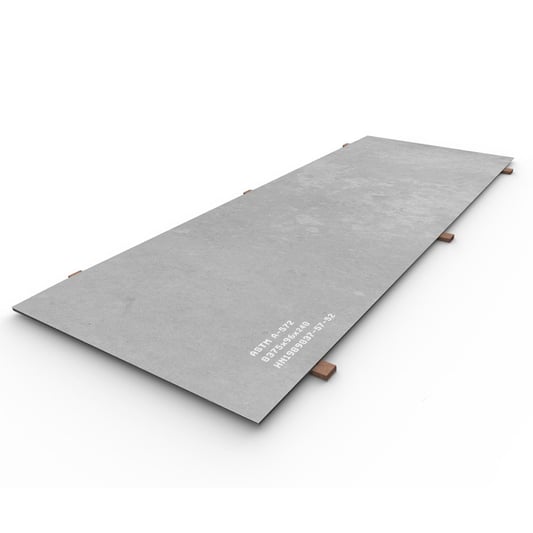
Grade 50 Plate

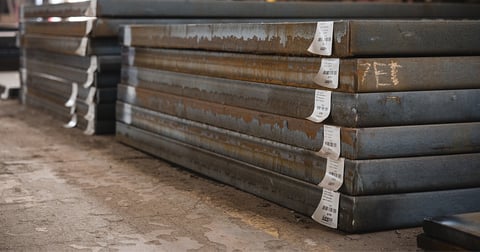
Extensive inventories of standard and heavy A572- 50 material ready to ship.

Processed Plate Parts

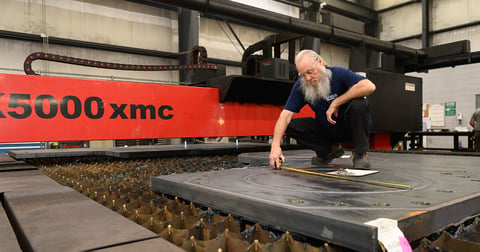
Leeco can supply processed parts and profiles that arrive ready for fabrication.

Tailored Sourcing Solutions

We offer tailored sourcing programs that optimize cost and logistics to best fit your need.

Grades

Energy transmission and distribution fabricators utilize structural steel plate grades that offer a balance of
strength and formability. Those grades include the following:
Grade Thickness Width Length
A572-50 3/16"-4" 48"-120" Up to 480"
A572-65 3/16"-1 1/4" 48"-120" Up to 480"
A588-A 3/16" – 8" 48" – 120" Up to 480"
A588-B 3/16" – 8" 48" – 120" Up to 480"
A588-K 3/16" – 8" 48" – 120" Up to 480"
A871-65 3/16" – 1 1/4" 48" – 120" Up to 650"

Processed Parts & Profiles

Steel plate for transmission and distribution applications often requires advanced, multi-function processing. Leeco’s laser cutting capabilities can process steel plate up to 4” thick with multiple features, including holes as small as 1/8”, all in a single setup. For larger components, our combination machines can plasma cut and drill on the same machine, eliminating the need for multiple handling steps.

The Leeco Advantage

Leeco Steel supplies steel plate that is manufactured into monopoles or used as base plates for a variety of structures. Our expert team has extensive industry knowledge and experience, allowing us to understand market trends so we always have in-demand transmission and distribution steel plate grades stocked in our distribution centers.

Leeco strives to be a true partner, not just a transaction. We deeply understand the plate market and the needs of energy transmission and distribution industries and use that knowledge and expertise to help you make the best sourcing decisions for your business. From an online customer portal to regular plate market update reports, Leeco offers distinct advantages to plate buyers.

Frequently Asked Questions

Learn more about steel plate for utility and energy transmission applications.
Steel plate is commonly used to manufacture transmission pole shafts, pole base plates, substation structures, anchor components, gussets and other structural attachments. The specific grade depends on project requirements, but fabricators often seek grades that provide the strength, toughness and weldability needed for utility infrastructure. Material selection is influenced by structure design, loading requirements and applicable utility specifications. Some of the most commonly requested grades in the United States are from the ASTM A572 specification, including grade 42, 50 and 65.
Processed steel plate helps fabricators reduce production time, labor requirements and handling throughout the manufacturing process. Services such as laser cutting, plasma cutting, drilling and beveling can be completed before material arrives at the fabrication facility. Receiving ready-to-fabricate components reduces bottlenecks and allows manufacturers to focus on rolling, welding and assembly rather than plate processing.
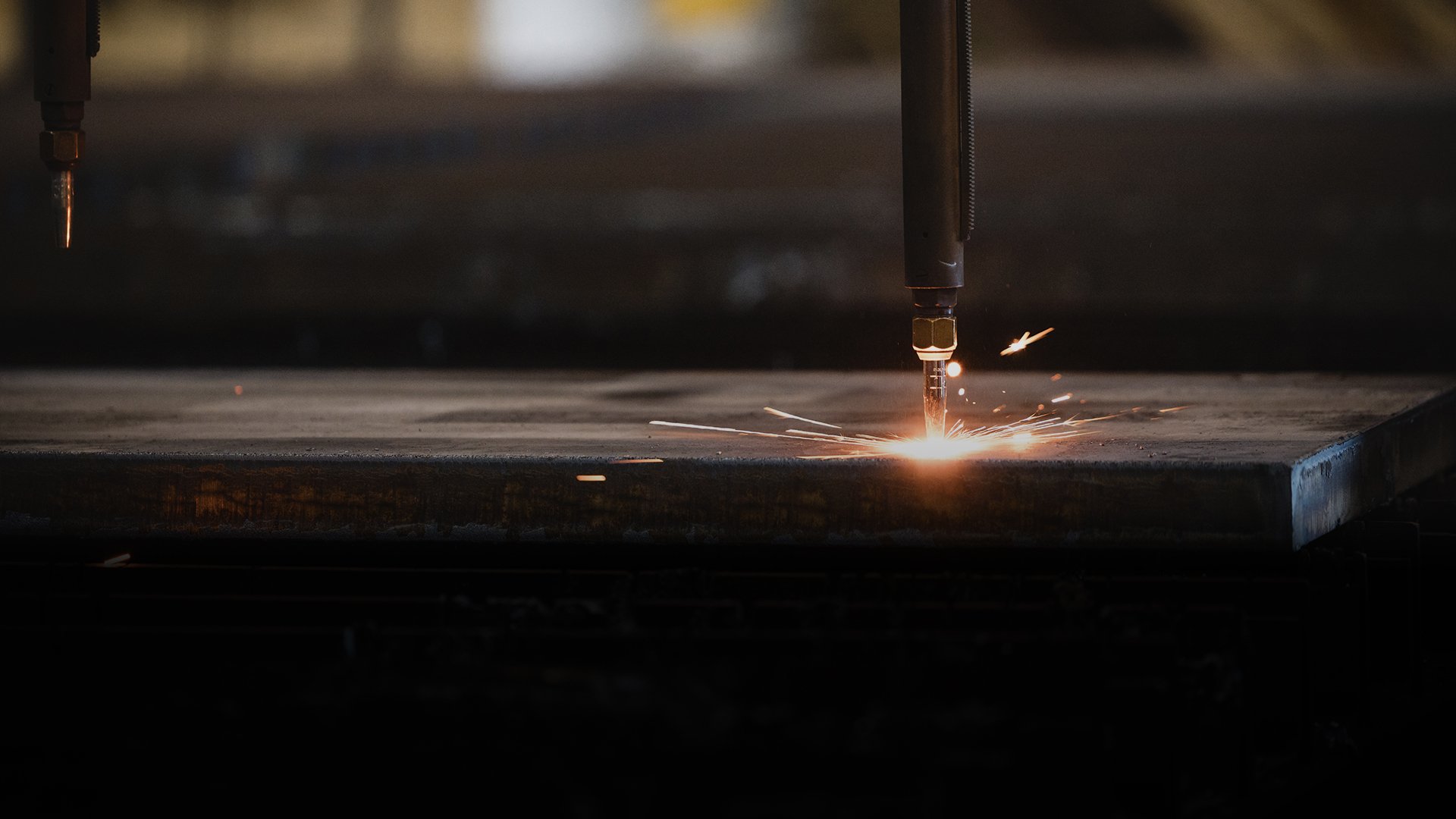
Transmission and distribution components often require precision cutting, drilling, hole-making, beveling, chamfering and edge preparation. Pole base plates may require tight-tolerance anchor bolt holes, while pole shaft components and attachment plates frequently require multiple features cut into the same part. Advanced processing capabilities that combine cutting and drilling in a single setup can improve accuracy and reduce the risk of dimensional errors. Transmission and distribution steel plate thickness can range from 3/16" to over 4". For this reason, more powerful cutting techniques, such as oxy cutting or 50kW or 60kW laser cutting, may be used to produce the parts. Post-production grinding or parts cleaning is common to remove slag after oxy cutting.
Utility and EPC projects frequently operate on demanding timelines, making manufacturing efficiency critical. Processed steel plate reduces the number of in-house fabrication steps required before assembly can begin. By minimizing material handling, reducing setup time and delivering ready-to-fabricate parts, fabricators can increase throughput, shorten production cycles and improve on-time delivery performance for transmission and distribution projects.
A oxy fuel torch head on a oxy table cutting into a steel plate.

Contact Leeco Steel

We want to be your supplier of choice for steel plate, parts and profiles.