
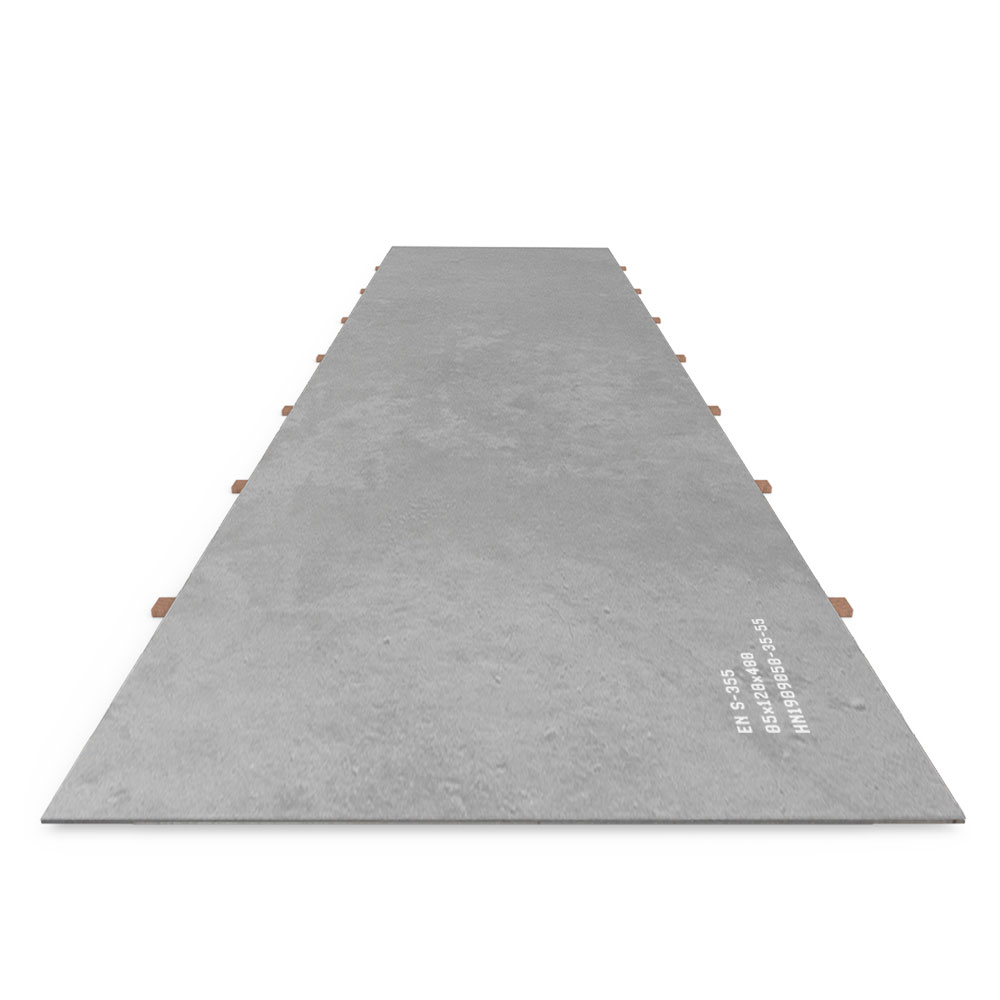
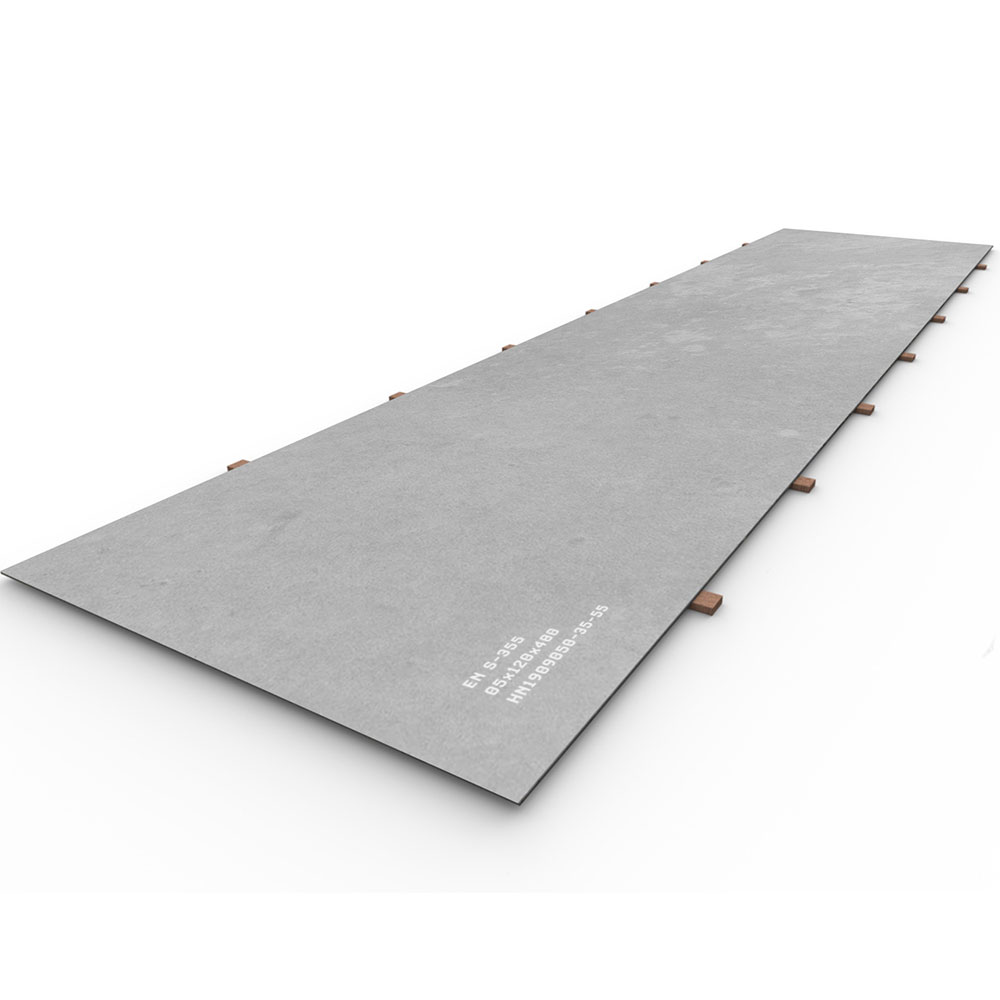
EN Standard S355 Structural Steel Plate

S355 structural steel plate is a higher-yield EN structural steel than S275, making it a popular choice for structural fabrication projects that require greater load-bearing performance.

BUILD A QUOTE

Features

  • High-strength non-alloy structural steel plate.

  • Meets European EN 10025 structural steel requirements.

  • Similar to ASTM A572 and ASTM A709 steel grades.
  • Material properties and chemical compositions vary by quality (i.e. JR, J0, K2) as specified by EN 10025 grade requirements.

  • Due to quickly shifting inventory, please inquire about available sizes.
Build Your Quote

Use our quote builder to configure your steel plates by selecting the material, size, thickness, quantity, and any custom requirements for fast, accurate pricing.

Product Details

Grade Thickness Width Length
S355N 16-100mm (3/16-4") 1220-3050mm (48-120") Up to 12m (480")
S355NL 16-100mm (3/16-4") 1220-3050mm (48-120") Up to 12m (480")
Thickness Range Yield (MPa) Tensile (MPa) Yield (ksi)
≤16 mm (0.6") 355 470-630 51
>16 to ≤40 mm (0.6"-1.6") 345 470-630 50
>40 to ≤63 mm (1.6"-2.5") 335 470-630 49
>63 to ≤80 mm (2.5"-3.1") 325 470-630 47
>80 to ≤100 mm (3.1"-3.9") 315 470-630 46

S355 Quality Designations & Charpy Requirements

Combining high strength with formability, S355 is commonly specified for wind energy structures and other demanding structural applications. When S355 is used in these applications, the required quality designation should be confirmed based on Charpy V-notch impact requirements and service temperature.

Charpy V-notch testing is performed at a specified temperature to measure the minimum impact energy the material absorbs in Joules. For example, grade S355J0 is tested at 0°C and must meet a minimum impact energy of 27J. Click here to learn more about Charpy impact testing.

Designation V-Notch Test Requirement
J0 27J, 0°C
JR 27J, 20°C
J2 27J, -20°C
K2 40J, -20°C
NL 27J, -50°C
ML 27J, -50°C

Grade Comparison

Frequently Asked Questions

Learn more about EN Standard S355 steel plate.
S355 is governed by EN standards, but some projects may require material that meets ASTM standards. ASTM A572 Grade 50 is commonly considered a close comparison and may be an acceptable substitute for some S355 applications because both grades have similar chemical compositions and are high-strength, low-alloy structural steels. However, S355 qualities such as JR, J0, J2, K2, NL or ML can have different toughness, delivery condition and Charpy requirements, so substitute material should be reviewed carefully. Always confirm the project specification, mechanical properties, chemistry, Charpy requirements and MTR details before substituting ASTM A572, ASTM A709 or another grade for S355.
S235, S275 and S355 are EN 10025 structural steel grades with different minimum yield strength levels. S235 is often used for general structural applications where lower strength is acceptable, S275 provides a middle strength level with good formability, and S355 is used when higher load-bearing performance is required.
S355 and S420 are both EN structural steel grades, but S420 has a higher minimum yield strength. S355 is often used when a project needs higher strength than S235 or S275, while S420 may be selected for more demanding structural applications that require greater load-bearing performance, such as heavy equipment, power plant or mining-related components.
S355 steel plate is used in structural fabrication projects that require higher yield strength than S235 or S275. Common applications include bridge components, offshore structure components, power plants, mining and earth-moving equipment, load-handling equipment and wind tower components. S355 is often used in projects based on European design standards where EN 10025 material is required.
In S355 steel plate, the “S” stands for structural steel, and “355” refers to the minimum yield strength of 355 MPa for certain thickness ranges. This EN 10025 naming system identifies the steel’s structural use and base strength level.
S355 Charpy designations identify the impact toughness requirements for different service temperatures. S355JR, S355J0, S355J2, S355K2, S355NL and S355ML may share the same base S355 strength level, but they are not always interchangeable because they have different Charpy test temperatures, impact energy requirements and delivery conditions. The required S355 quality should be confirmed before selecting or substituting material, especially for wind energy, offshore, bridge or low-temperature structural applications.